Thursday, September 19, 2019

Bring the Book! (A SOAP Journal from Nehemiah 8:1-3, 8-9)

Photo by Ben White on Unsplash
In addition to regular articles, I regularly post some simple SOAP journals that were produced during a regular small group gathering to read, journal, pray, and encourage one another. These are not exhaustively studied as they are generally the work of 20 minutes of reading, 20 minutes of writing, and 20 minutes of sharing with each other what we have written. Whether we are Christian leaders or new believers, this group approach to Bible journaling is encouraging.
If you are not familiar with the term, we used the SOAP acronym as a simple devotional guide, standing for:
  • Scripture—what verse or short section caught my attention today? 
  • Observation—what can I briefly notice that the passage specifically says?
  • Application—what will I do differently as a result of having read this today?
  • Prayer—what will I ask the Triune God to do for, in, and through me today?
----------------------------------------------------------------------------------------------------------------
S = Nehemiah 8:1-3, 8-9
And all the people gathered as one man into the square before the Water Gate.
And they told Ezra the scribe to bring the Book of the Law of Moses
    that the Lord had commanded Israel. 
                So Ezra the priest brought the Law before the assembly,
         both men and women and all who could understand what they heard, 
on the first day of the seventh month.
And he read from it facing the square before the Water Gate
                               from early morning until midday,
                              in the presence of
          the men and the women and those who could understand.
And the ears of all the people were attentive to the Book of the Law…
v. 8-9
        They read from the book, from the Law of God, clearly, 
  and they gave the sense, so that the people understood the reading.
 And Nehemiah, who was the governor,
 and Ezra the priest and scribe,
 and the Levites who taught the people said to all the people, 
         “This day is holy to the Lord your God; do not mourn or weep.”
                                  For all the people wept
      as they heard the words of the Law.

Photo by Nicole Honeywill on Unsplash
O = In this passage, we read about a unique request. The people gathered “as one man” and told Ezra to “bring the Book” (of the Law) and read it. As a pastor and Bible teacher for over 30 years, I love it when people want to know more about what God has said in the Bible, and then they respond to it on a heart level. In Nehemiah 8, it was not the priest, prophet, or governor who called for the reading of the Law, but the people who said, “Bring the book!”
It is quite possible that they realized that their re-entering the land was a new start and remembered something about how Joshua had gathered the Israelites at Mt. Ebal and Mt. Gerizim (in obedience to the Lord) to publicly read the Law and declare the covenant blessings and curses at the beginning of the campaigns of conquest (Joshua 8). The reading by Ezra was explained by faithful men so that all could understand. But their understanding was not just on an intellectual level; at this moment, the hearts of the people were softened to respond. Their reaction to hearing and understanding the Law was to weep, likely with conviction and shame, for as a people and as individuals, they had all violated the law. The Law also makes it clear that they could not hope to stand on their own and they had to be encouraged that “the joy of the Lord was your strength” (v.10). Despite their unworthiness, they could rejoice that “his steadfast love endures forever” (Psalm 136). The same is true for us today, as it is written,
Photo by Gift Habeshaw on Unsplash
But God, being rich in mercy, because of the great love with which he loved us, even when we were dead in our trespasses, made us alive together with Christ — by grace you have been saved— and raised us up with him and seated us with him in the heavenly places in Christ Jesus, so that in the coming ages he might show the immeasurable riches of his grace in kindness toward us in Christ Jesus. For by grace you have been saved through faith. And this is not your own doing; it is the gift of God, not a result of works, so that no one may boast. For we are his workmanship, created in Christ Jesus for good works, which God prepared beforehand, that we should walk in them. (Eph. 2:4-10)

Photo by KEEM IBARRA
on Unsplash
A = In this passage, the reading of the Law was done publicly, and the explanation was public as well. Theological concepts and terms were interpreted so that all those gathered that day could understand. The law of God was not about secret knowledge for an elite few but was given as a gracious message for all—men, women, and children alike. In applying this passage, I find myself asking questions like: How eager am I to hear the Word of God? How well can I explain it to others? How readily do I respond on a heart level to God’s written Word?
This passage, in concert with many others, is a reminder to me of my need to hear, understand, and respond to the Word of God together in community, not just in introverted isolation. To the degree that I understand the Word of God, I should respond in humility, but also in the faith that it is the Lord who lifts my head and strengthens me with his joy! This situation reminds me of Luke 15:21-24, where the prodigal son comes back “weeping” but is gathered up into the joy of the Father’s overflowing love. Just as the father rejoiced in the return of his “unworthy” son, and picked him up off the ground, clothed him in a special robe, restored him with a ring, and prepared a feast for him, the Lord Jesus does the same for us! How can I not repent and return to him?

P = O Lord, let not my heart become disinterested in what you would say, nor let it become hardened to my need to hear from you, the Lover of my soul. May my heart respond in mournful humility for I regularly fall short, but also in joyful faith because you have made a way and desire to share your joy with us! May I, like Ezra, “bring the Book” to read it not only to others but to allow it to read me and conform me to the image of Christ (Rom. 8:29)

Thursday, September 5, 2019

Are We Merciful or just Mean? (Psalm 41)

This post was originally published on one of my other blogs, but because of its application to pastors and Christian leaders, I am reposting it here. As leaders, every word we speak, print, or post has the potential to bring healing or great harm (Prov. 12:18). Likewise, we are often the targets for those who are auditioning for Satan’s (i.e., accuser) job. Will we be revealed to be men and women of great mercy or as mean as a snake? This meditation on Psalm 41 considers both possibilities and suggests ways that we can keep from becoming more hurtful than healing. 

Psalm 41:1-3
Blessed is the one who considers the poor!
    In the day of trouble the Lord delivers him;
the Lord protects him and keeps him alive;
    he is called blessed in the land;
    you do not give him up to the will of his enemies.
The Lord sustains him on his sickbed;
    in his illness you restore him to full health. 

Photo by Shail Sharma on Unsplash
In a previous post on Psalm 40, we saw the psalmist testify about the good that God had done for him, and we see that here in Psalm 41 as well… in the person of the Lord himself and in the one who represents him well. 
     “Blessed is the one who considers the poor!” (v.1)
Here is a question... are verses 1b - 3 a description of what God does for the poor or what God will do for the one who cares for the poor? Perhaps both. Willem Van Gemeren, in The Expositor’s Bible Commentary, notes that,
“The Father in heaven looks for those who wisely conform to his heavenly kingdom on earth: righteousness, holiness, love, and justice. He cares for the oppressed and delights to see his children's concern with the things that are important to him: concern for those in need (cf. 35:13-14; 112:9 –Emphasis mine).”[1]

We should also observe that David ended the previous psalm with the cry,
 As for me, I am poor and needy,
    but the Lord takes thought for me.
You are my help and my deliverer;
    do not delay, O my God! (40:17)

David might have been establishing a case whereby the Lord would do merciful things for him since he was also in need. It is also possible that he was emphasizing the importance for those who have power over the poor/weak/sick/powerless to use that power to help and not to harm. This idea may be supported by the title of this psalm in the Syriac, which says, “It was a Psalm of David when he appointed overseers to take care of the poor.” (Adam Clarke)

This psalm seems to suggest that how we treat “the poor” in their day of trouble influences how we will be treated in our own day of trouble. Jesus picked up on this prophetic message (and others such as Psa. 18:25-26 and Micah 6:8) in the Sermon on the Mount when he said, "Blessed are the merciful for they shall receive mercy" (Matt 5:7). Later James, Jesus' half-brother and leader of the Jerusalem church, wrote that pure religion is evidenced in our treatment of “widows and orphans” and not just some abstract form of personal piety (James 1:27).

Nineteenth-century preacher Charles Spurgeon, in his classic Treasury of David, elaborated on how the faithful servants of the Lord are both relationally wise and merciful in their consideration of the poor, “They do not toss them a penny and go their way, but enquire into their sorrows, sift out their cause, study the best ways for relief, and practically come to their rescue; such as these have the mark of the divine favor plainly upon them…“The promise is not that the generous saint shall have no trouble, but that [they] shall be preserved in it, and in due time brought out of it.”[2]

Certainly, these verses depict the kindness and grace of God, shown to those who are “poor”— a word that depicts the marginalized in every society on earth, but also in the Hebrew context that specially referred to those who were humble before the Lord, confessing their sin. In the New Testament, we see both aspects on the lips of Jesus in Matthew 5’s “poor in spirit” and Luke 6’s “poor” in an economic/power sense.

I am touched by the merciful kindness shown to "the poor" in verses 1-3 of this psalm. I am also disturbed by the contrasted meanness of others in verses 5-10 — the malicious, the slanderers, the whisperers, the scandalmongers, the prognosticators, and the betrayers!
Have you ever been “visited” by such as these? David had...
And when one comes to see me, he utters empty words,
    while his heart gathers iniquity;
    when he goes out, he tells it abroad. (v.6)

Pigpen by Charles Schultz
I don’t want to be the “utterer of empty words” nor one with a heart that “gathers iniquity” like velour gathers lint. I don’t want to spread abroad the iniquity I gather like so much sticky pollen and dust due to the negative charge of a fallen world. Instead, I want to spread the goodness of God, which I have received. God doesn’t want his people to be the spiritual/relational equivalents of the Peanuts character “Pigpen,” whose very presence continuously broadcasts dirt and dust. I also don’t want to imagine the worst for others (v.7), even though we are often faced with the reality of it.

Photo by Elijah O'Donnell on Unsplash
How can we keep from being mean like those described in v. 5-10? I don’t think that too many people set out to speak hurtfully or even use mean words, but the less we listen to the heart of God and more to the selfishness and demands of the world we start to sound like those to whom we listen. I was in a man’s office recently and noticed that his bookshelves were covered in a thick layer of dust. It didn’t happen all at once, but a little bit at a time, so gradually that he had not noticed it. But when I walked in for the first time, I noticed it right away. It is not fun when the light of God’s Word is focused by the Spirit on some areas of our hearts that have become clogged with the dust and disease of selfish pride, but it is therapeutic for it leads us to confession and cleansing!

What else can we do? Having confessed our sins to God and asked for mercy and grace to speak the truth in love, always looking to build up rather than tear down, there are several other safeguards, I would suggest that will prevent us from becoming one of those odious individuals mentioned in v.5-6 that hurts others verbally. We can...
  1. Know that the Father, Son, and Holy Spirit delight in you! Jesus was prepared for his times of greatest testing by the knowledge of his Father's love and acceptance (Matt. 3:16-17; 17:5). The triune God knows your flaws already and still delights in you! Publishing and critiquing the perceived faults of others does not enhance your standing before the Lord. It is not like playing “king of the hill,” where we climb higher by pushing and throwing others lower. (--> Romans 5:6-11)
  2. Know that our enemy, whose very name means “Accuser”, will not have the last word. And when the accuser is silenced by the manifested love of God in Christ, let us not play “devil’s advocate” and take up his taunts against others for whom Jesus died. (--> Rev. 12:10-11; Romans 8:31-34)
  3. Know that we are secure in the loving presence of the Lord Jesus forever. We don’t have to be overcome with anxiety, insecurity, or discouragement at our own shortcomings. We are not called to climb up to heaven to win God’s favor; rather, he came down to us to set us free from all that brings guilt and shame! (--> Romans 8:14-17, 35-39) It is his love that transforms our hearts!
  4. Know that our words quickly reveal the condition of our hearts. So, when we (or others) notice our words growing more caustic, impatient, overly sarcastic, let it be like an early warning system that our heart is no longer responding to the lovingkindness of the Savior, but has begun to go astray to gather and broadcast iniquity. (--> Matt. 15:1-20; 12:34; Mark7:1-23; Luke 6:45)
  5. Know that you will always need God’s help and make a practice of asking for it, as the psalmist models for us in Psalm 141:3-4,
     Set a guard, O Lord, over my mouth;
         keep watch over the door of my lips!
     Do not let my heart incline to any evil,
         to busy myself with wicked deeds
     in company with men who work iniquity,
         and let me not eat of their delicacies!

As recipients of great mercy, even before we knew we needed it, let us extend mercy to others, though they may not know they need it too! But having received it they will be changed. May the Heavenly Father and Christ the Son use us to pour his love into the thirstiest of hearts through the work of the Holy Spirit this week! 

And for those of us who face the hour or day of trouble, may we embrace the Lord's delivering presence in and through it! 
"Blessed is the one who considers the poor!
    In the day of trouble the Lord delivers him..." (v.1)


[1] Willem A. Van Gemeren in EBC Vol. 5, Psalms—Song of Solomon, Zondervan. 325.
[2] C.H. Spurgeon, Treasury of David, Vol. 2 Psalms 27-52, Baker Books, Grand Rapids, 283-284.

Thursday, July 11, 2019

Dry for the Sake of Others (Proverbs 31:4-9)

The following reflection comes from a recent Bible journaling experience with a great group of brothers in the Lord. Our assigned text for the day included Proverbs 31:4-9...
It is not for kings, O Lemuel,
      it is not for kings to drink wine,
      or for rulers to take strong drink,
lest they drink and forget what has been decreed
      and pervert the rights of all the afflicted.
Give strong drink to the one who is perishing,
      and wine to those in bitter distress;
let them drink and forget their poverty
      and remember their misery no more.
Open your mouth for the mute,
      for the rights of all who are destitute.
Open your mouth, judge righteously,
      defend the rights of the poor and needy.

It should be noted that the king’s wise mother, not just his father, taught him important lessons about life and about how to govern wisely. Since it seems that we live in a dearth of governing wisdom, I come looking to learn from this passage. 

Photo by Felipe Ponce
on 
Unsplash
Secondly, I observe that Lemuel was immediately counseled to avoid alcohol for the sake of justice and mercy. This is such an odd concept since in our Northwest culture, even Pastors and Christian leaders freely partake of local wine, whiskey, and microbrews. We don’t like anyone telling us what to do, and indulgence is often taken as a sign of spiritual maturity…that somehow we are past all that old-fashioned legalistic stuff. 
However, the reason that the king was to abstain wasn't immaturity but as an expression of the love of God for his people. It was so that the ruler might consistently be both just and merciful. This means subordinating personal freedom for the sake of the community's good. It was the king’s job to preserve justice so that the laws might be kept fairly and the rights of the afflicted might not be perverted. Sadly, history is not lacking in examples of kings who put their appetites first to terrible effect on their people. Maybe they didn't have a wise mother to instruct them.

Instead of consuming in privilege, this text may suggest that the king should also be
Photo by Rachael Henning
 on Unsplash
generously involved in providing merciful “medication” to help meet the needs of those who are suffering. This is something addressed in the New Testament as Paul declared to the Galatian churches,

"For you were called to freedom, brothers. 
Only do not use your freedom as 
an opportunity for the flesh, 
but through love serve one another. 
For the whole law is fulfilled in one word: 
'You shall love your neighbor as yourself.'” (Gal. 5:13-14)

Thinking of others first is always a virtue to be pursued. However, our indulged appetites can impair our judgment and lead us to treat other people like things rather than as human beings created in the image of God. What does this passage say to those with cultural privilege in the face of human suffering? How would the Spirit have you apply this concept in your context?

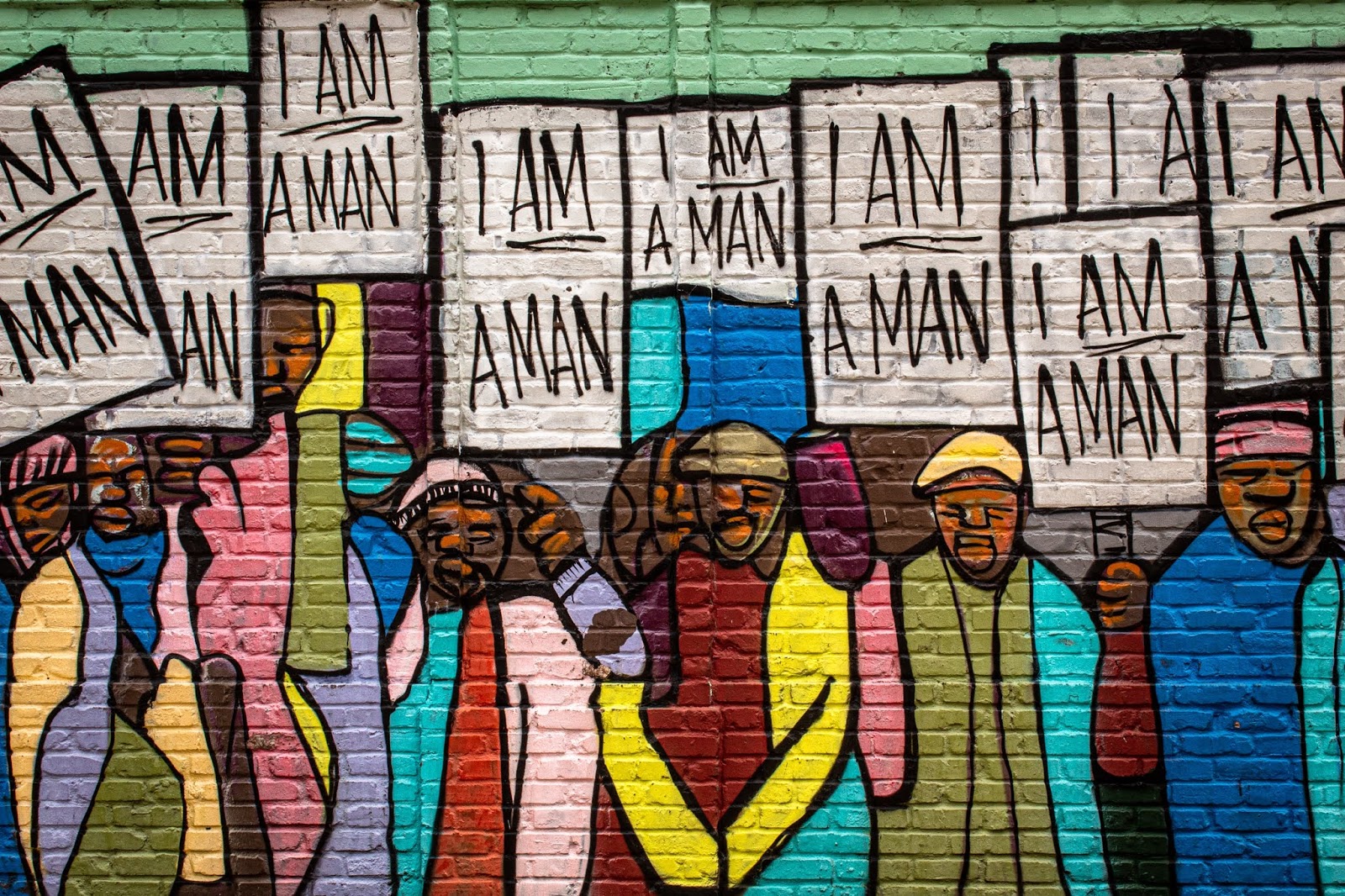
"I am a man" Protest Mural in Memphis, TN
Photo by 
Joshua J. Cotten
 on Unsplash
Thirdly, the king was not merely to "do no harm" through selfish consumption but was to actively advocate for the voiceless, the powerless, and the resourceless, not for those who already have more than they need. Verses 8-9 make a strong statement that we should not miss. The king was instructed,
Open your mouth for the mute,
             for the rights of all who are destitute.
Open your mouth, judge righteously,
      defend the rights of the poor and needy.

This passage serves to help me remember that, to whatever degree I am a godly leader, it is to share God’s goodness with others and not to serve my own appetites. To whatever degree I have influence, I should leverage it for the benefit of the underdog, the poor, and the needy. If I am to do this, then I need to be saturated with the Word of God and filled with the Holy Spirit, rather than drunk and otherwise altered by the excesses that the world might provide to one who walks in privilege.

Will I stop talking long enough to listen? 
Will I stop consuming enough to give? 
Will I stop posturing long enough to advocate for others? 
Too often, I do not, will not, and craft excuses that exempt me from any self-recrimination.

O Lord, may I become more sensitive, more aware, more responsive, and more loving towards your children (though they may walk disguised). As you have shared with me, gifted me, provided for me, and defended me… work through me to share all the goodness of your love with others.


Tuesday, July 2, 2019

Righteous Plowing and Planting (Hosea 10)

The following reflection comes from a recent Bible journaling experience with a great group of brothers in the Lord. Our assigned text for the day included Hosea 9-14. Several of us chose to focus on the following passage from Hosea 10:1-2, 12-13:

Israel is a luxuriant vine
    that yields its fruit.
The more his fruit increased,
    the more altars he built;
as his country improved,
    he improved his pillars.
Their heart is false;
    now they must bear their guilt.
The Lord will break down their altars
    and destroy their pillars…


Newly Plowed Field in Israel

Sow for yourselves righteousness;
    reap steadfast love;
    break up your fallow ground,
for it is the time to seek the Lord,
    that he may come and rain righteousness upon you.
You have plowed iniquity;
    you have reaped injustice;
    you have eaten the fruit of lies.
Because you have trusted in your own way
    and in the multitude of your warriors,
therefore…

Israel, the vine God had lovingly planted (see Isaiah 5:1-5), had been deceived by their own self-love and pride and came to believe that the economic and political blessings they enjoyed resulted from their manipulating the gods of the land rather than a gracious gift of God. As a result, they trusted their own efforts and wisdom instead of following the Lord in obedience. God repeatedly warned the unfaithful people through authentic men and women called prophets. In this book, the prophet Hosea consistently declared that judgment was at hand. 

Even still, in the face of shameless wickedness, the Lord through the prophet called Israel to repent and plant the seed which yields good fruit. Planting “righteousness”—a heart that loves God will also do what is right as an expression of that love. As John would later write, “We cannot love God and hate our brother (in word or deed).” While this passage is an extended exploration of the “you reap what you sow” motif, God doesn’t delight in their destruction, but promises their eventual redemption and return. We should notice that Hosea is an affectively-charged book that serves as a window into the heart of God as he wrestles with the reckless disregard of his children (I have long used chapter 11 as a case study for the father-heart of God). 

It is amazing to me how faithful God is to repeatedly tear down the idolatrous altars of our fleshly infatuations and the false trusts of our minds that clamor for our attention, including the skillfully-wrought towers of pride and self-sufficiency. He doesn't turn and walk away. For all our faithlessness and filthiness, it doesn't distance him from us. He watches over us, providing for us unrecognized (11:4), 

What is the righteousness I should plant today? What ground of my heart has lain fallow as I have sought my own pleasure and profit instead of heeding the just and gracious words of the prophets? What injustice have I readily harvested? What lies have I eaten because of my self-confidence and the human power and might of my people? Have I begun to desire the destruction of those not like me? 

I am not sure that I want to know the answers to these questions. It hurts too much. Thankfully, while some introspection is helpful, I don’t have to list all of my many faults; I only need to humble myself and respond to the love of the Lord today, for...
  • He will plant his righteousness in my formerly barren heart.
  • He will love me faithfully and heal my wanderings.
  • He will take my solitary nature and set me in a family, his family, and he will call me his people!
O Lord, deliver me from the idol-makers guild. Please lift my head to see you as you are, and may my heart be filled with love for you alone. You so desire to bless the lives of your people, may I not accumulate your blessings only to name them as my own, but may I share what you have given me with others in humble gratitude and faith.

Thursday, June 27, 2019

The Danger of Pride

Don't believe your own press reports!
Recently, while reading 2 Kings and 2 Chronicles, I noticed that both Judean King Amaziah and his son King Uzziah started their reigns well, “doing what was right in the eyes of the Lord” (2 Chron 25:2; 26:4) but later, after initial successes, they became proud and suffered for it. 

First, Amaziah changed his battle plans to obey God and trusted that the Lord would make up for his sending Israelite soldiers home with pay. Then, after defeating a smaller army of Edomites, he called out the King of Israel over atrocities committed by his spurned mercenaries. At that point, Jehoash [king of Israel] warned Amaziah [king of Judah] via a don't-get-too-big-for-your-britches kind of parable. His punch line is found in 2 Kings 14:10,
Photo by Hidde Rensink on Unsplash
“You have indeed struck down Edom, 
                   and your heart has lifted you up.
Be content with your glory, and stay at home, 
 for why should you provoke trouble so that you fall, 
                         you and Judah with you?”

The northern kings were not known for speaking the truth, but this statement was startlingly insightful and accurate. However, Amaziah didn’t listen and attacked Israel anyway. He lost. In fact, Jehoash’s ravaging army tore down a large section of Jerusalem’s city wall and looted all the gold and silver furnishings from the Temple!

Photo by Randy Fath on Unsplash
What was it that changed? Where did it all go wrong for Amaziah? First, he didn’t serve the Lord “with a whole heart.” Secondly, after defeating the Edomites, Amaziah did something very strange—he brought back the idols which he had captured and worshipped them. Such an act makes no sense. Since those idols had not been able to deliver Edom from Amaziah's own hand, why would he worship them? Probably because they were a symbol of his own accomplishment. If this was his reasoning, then it seems more like our behavior today, where we glory in our perceived successes instead of in God’s past deliverances. How often do we memorialize our own victories and “worship” what we have taken from others? Such idolatry of the heart is rooted in pride.

Years later, Amaziah’s 16-year-old son Uzziah (aka, Azariah) became king. “He did what was right in the eyes of the Lord… as long as he sought the Lord, God made him prosper” (2 Chron 26:4-5). He fought successfully against the Philistines and the Arabians while other nations opted to pay tribute to him. He strengthened and upgraded his army and fortified Jerusalem with towers and even installed ballistic machines of war upon them (v.11-15). But, then things changed... and 2 Chronicles 26:16-20 tells the tragic story,  

But when he was strong, he grew proud, to his destruction. For he was unfaithful to the Lord his God and entered the temple of the Lord to burn incense on the altar of incense. But Azariah the priest went in after him, with eighty priests of the Lord who were men of valor, and they withstood King Uzziah and said to him, “It is not for you, Uzziah, to burn incense to the Lord, but for the priests, the sons of Aaron, who are consecrated to burn incense. Go out of the sanctuary, for you have done wrong, and it will bring you no honor from the Lord God.” Then Uzziah was angry. Now he had a censer in his hand to burn incense, and when he became angry with the priests, leprosy broke out on his forehead in the presence of the priests in the house of the Lord, by the altar of incense. And Azariah the chief priest and all the priests looked at him, and behold, he was leprous in his forehead! And they rushed him out quickly, and he himself hurried to go out, because the Lord had struck him. 

Both father and son suffered for their own prideful mistakes. Despite initial trust in the Lord, albeit without a whole heart, they eventually trusted more in their own strength than in the Lord.

Uzziah was on the right path a bit longer, but then his heart became proud, and he thought himself privileged enough to enter the Holy Place of the Temple and offer incense, which only the priests were permitted to do. He presumed that he could approach God on his own merits if God even existed. When the valiant priests “withstood” him, instead of repenting, Uzziah became angry, and when he became angry, leprosy broke out on his forehead—an external manifestation of an inward spiritual condition.

"Whoever exalts himself will be humbled, and whoever humbles himself will be exalted." (Matthew 23:12; see also Luke 14:11; 18:14; James 4:6,10; 1 Peter 5:5b-6)

Photo by Edwin Andrade on Unsplash
As pastors and Christian leaders, do we presume too much? Have we begun to believe that the Lord’s blessing is a result of our own competence and leadership skills? Do we think that we are entitled to recognition and being platformed above others? If so then we should remember that the Lord is faithful to tear down the idols we build to our own egos. Will we humble ourselves and become teachable again, or will we stiffen our necks and grow angry revealing our unclean hearts?

It seems that leprosy of the soul is far more prevalent today than that of the forehead, and so sadly, it often goes untreated. Will you, along with the psalmist and me, ask the Lord to do his cleansing work inside and out?

Search me, O God, and know my heart!
    Try me and know my thoughts!
And see if there be any grievous way in me,
    and lead me in the way everlasting! (Psalm 139:23-24)


Photo by Ben White on Unsplash